
Where does a lion sleep? Where do bees live? Why do rabbits dig underground? Children are naturally curious about animals, and learning about animals and their homes is a fun way to understand how different creatures live, stay safe and raise their young.
From tiny anthills to large caves, every animal home has a special purpose. Some homes are built by animals themselves, while others are natural places that animals use for shelter.
Table of Contents
What Are Animal Homes?
Animal homes are places where animals live, rest, stay protected and sometimes raise their babies. These homes can be found on land, underground, in trees or even in water.
Learning the names of animal homes helps children understand that different animals need different kinds of shelter depending on their size, behaviour and surroundings.
Why Do Animals Need Homes?
Animals need homes for many of the same reasons people do. A safe shelter protects them from changing weather, predators and other dangers.
Protection from Weather and Danger
Animal homes can protect them from rain, heat, cold and strong winds. Burrows, dens and caves also help animals hide from predators.
A Safe Place to Rest and Sleep
Animals need quiet places where they can rest without being disturbed. Birds sleep in nests, lions may rest in dens, and horses stay in stables.
Raising and Protecting Their Young
Many animals use their homes to keep their babies safe. Birds build nests for eggs and chicks, while rabbits raise their young inside underground burrows.
Storing Food and Staying Safe from Predators
Some animals store food inside or close to their homes. Ants collect food in colonies, while squirrels may hide food near trees or underground.
Different Types of Animal Homes
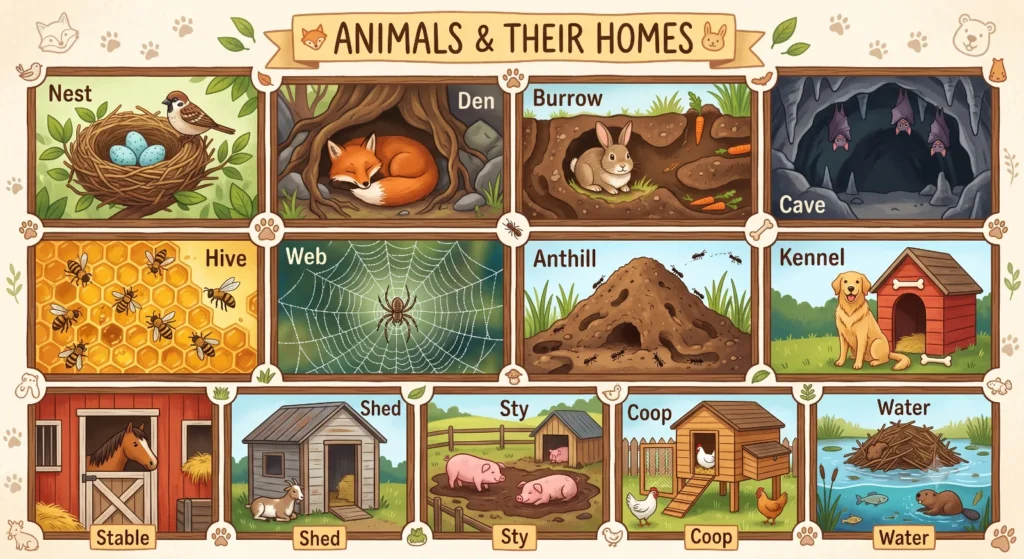
Animals live in many different kinds of shelters depending on their natural behaviour.
Nests
Birds usually build nests using twigs, grass, leaves and feathers. Nests provide a safe place for eggs and young birds.
Dens
Animals such as lions and foxes may live or rest in dens. Dens are usually hidden and protected spaces.
Burrows
Rabbits, moles and some other animals dig tunnels underground. These are called burrows.
Caves
Bats, bears and other wild animals may use caves for shelter and protection.
Hives
Bees live together in hives. A hive provides space for honey, young bees and the entire bee colony.
Webs
Spiders create webs from silk. Webs help many spiders catch insects for food.
Anthills
Ants live in highly organised colonies inside anthills. These structures contain tunnels and chambers.
Kennels, Stables and Sheds
Domestic and farm animals often live in shelters created by humans, such as kennels for dogs, stables for horses and sheds for cattle.
List of Animals and Their Homes
The following list of animals and their homes is useful for young learners who are beginning to identify common animal shelters.
Dog – Kennel
A kennel provides shelter and a resting place for a dog.
Horse – Stable
A stable keeps horses protected and comfortable.
Cow – Shed
Cows are usually kept in sheds or cattle shelters.
Pig – Sty
A pig lives in a shelter commonly called a sty.
Hen – Coop
A hen stays in a coop, where it can rest and lay eggs safely.
Fish – Water
Fish live in aquatic environments such as rivers, lakes, ponds and oceans.
An animals and their homes chart can make these pairs easier for children to remember through pictures and simple matching activities.
Homes of Domestic and Farm Animals
The phrase domestic animals and their homes usually refers to animals that live close to humans. Dogs may stay in kennels, horses in stables, hens in coops, pigs in sties and cattle in sheds.
Homes of Wild Animals
Learning about wild animals and their homes introduces children to natural shelters such as caves, dens, tree hollows and underground spaces. These homes help animals survive without depending on people.
Homes of Birds and Insects
Birds generally build nests in trees, bushes, buildings or other safe places. Insects have very different homes: bees live in hives, ants live in colonies under anthills, and some insects make shelters from leaves or soil.
Animals That Live Underground, in Trees and in Water
Different animals are suited to different environments. Rabbits and moles live underground, monkeys and squirrels often spend much of their time in trees, while fish and many other aquatic animals live in water.
Animal Homes vs Animal Habitats: What Is the Difference?
An animal home is the specific shelter where an animal rests or raises its young, while a habitat is the larger natural environment in which the animal lives.
| Animal | Home | Habitat |
| Lion | Den | Grassland or savannah |
| Bird | Nest | Forest, garden or wetland |
| Rabbit | Burrow | Grassland or woodland |
| Bee | Hive | Gardens, forests and fields |
| Fish | Water | Rivers, lakes or oceans |
Children at best ICSE Schools in Bangalore may explore such concepts through environmental studies, classroom activities and observation-based learning.
How Do Animals Build Their Homes?
Animals use materials available around them. Birds collect twigs and leaves, spiders produce silk, ants dig tunnels, and bees create wax structures. Each home is built in a way that suits the animal’s needs.
Interesting Facts About Animals and Their Homes
Some animal homes are surprisingly complex. Weaver birds carefully weave grass into hanging nests, termites build tall mounds, and bees create neat hexagonal honeycomb structures. Some animals even reuse abandoned shelters made by other creatures.
Fun Ways for Kids to Learn About Animal Homes
Young children often learn best through play, observation and hands-on activities. Many top play schools in Bangalore use simple games, pictures, stories and craft activities to introduce concepts related to animals and nature.
Animal and Home Matching Games
Create cards with pictures of animals and separate cards showing their homes. Children can match each animal to the correct shelter.
Drawing and Craft Activities
Kids can draw a bird’s nest, make an anthill using clay or create a paper bee hive.
Animal Home Quiz
Ask simple questions such as “Where does a horse live?” or “Which animal lives in a hive?” to make revision enjoyable.
Nature Walk and Observation Activities
A walk through a garden or park can help children spot nests, webs, anthills and other natural shelters while learning through real-world observation.
Presidency School RT Nagar: Helping Children Understand Animals Through Everyday Learning
Understanding animals and their homes becomes much easier when children can connect what they learn in class with familiar examples from nature and everyday life. At Presidency School RT Nagar, young learners explore where animals live through engaging activities such as picture identification, matching exercises, storytelling, model-making, and interactive classroom discussions. Learning that birds live in nests, rabbits in burrows, bees in hives, and lions in dens helps children improve observation, vocabulary, memory, and scientific understanding. By making environmental learning simple, visual, and enjoyable, Presidency School RT Nagar encourages children to become curious learners who appreciate wildlife and understand why every living creature needs a safe habitat.
Conclusion
Animal homes introduce children to an important idea: every living creature needs a suitable place to survive, rest and grow. By learning about kennels, stables, burrows, dens, nests, hives and other shelters, children begin to understand how animals adapt to their surroundings and why different species require different kinds of homes. Activities such as matching games, crafts, quizzes and nature walks can make this topic easier to remember while encouraging curiosity and observation. Learning about animals and their homes also builds early environmental awareness, helping children appreciate the connection between living creatures, their shelters and the habitats they depend on.